
Ethical Considerations in Business Accounting in East Bay

A CPA assessing a company’s financials

Ethical accounting practices are the cornerstone of sustainable growth and long-term success. As financial stewards of their organizations, accountants play a pivotal role in upholding the highest standards of integrity and transparency.

In this blog, we’ll explore five crucial ethical considerations that every business accounting professional in East Bay should keep in mind, ensuring a sound financial foundation while building trust within the community.

Accuracy and Truthfulness

The foundation of ethical accounting begins with accuracy and truthfulness in financial reporting. Misleading or falsified financial statements can harm a business’s reputation and lead to severe legal consequences. Accountants in East Bay must prioritize precision in recording financial transactions and presenting a true and fair view of the company’s financial health.

Confidentiality

In the digital age, the safeguarding of sensitive financial information is paramount. Ethical accountants must maintain strict confidentiality when handling financial records, proprietary data, and personal client information. Upholding confidentiality not only demonstrates professionalism but also helps to foster trust between clients and their accounting partners.

Business accounting in progress

Conflict of Interest

East Bay’s diverse business landscape can give rise to situations where conflicts of interest may arise. Accountants must identify and manage potential conflicts, ensuring that their professional judgment remains unbiased and in the best interest of the client or employer.

Transparency in disclosing any potential conflicts helps build credibility and maintains the integrity of the accounting profession.

Compliance with Regulations

Staying compliant with local, state, and federal regulations is non-negotiable. Ethical accountants should stay informed about ever-evolving accounting standards and tax laws in East Bay. Adhering to these regulations not only keeps businesses out of legal trouble but also ensures accurate and fair financial reporting.

Continuous Professional Development

The accounting field is dynamic, with new technologies and practices emerging constantly. Ethical accountants in East Bay should engage in continuous professional development to stay updated with the latest accounting trends, software, and ethical guidelines. This commitment to growth demonstrates a dedication to providing clients with the highest level of service.

Transparency in Communication

Effective communication is an ethical imperative in business accounting. Ethical accountants should be transparent in their interactions with clients, stakeholders, and colleagues. Clear and honest communication about financial matters fosters trust, helps avoid misunderstandings, and ensures that all parties are well-informed to make informed decisions.

Transparency extends to explaining complex financial concepts in accessible language, empowering clients to grasp the nuances of their financial situation and make informed choices.

For expert guidance on ethical business accounting in East Bay, look no further than Nidhi Jain CPA. With a deep understanding of local regulations and a commitment to upholding the highest ethical standards, Nidhi Jain CPA is your trusted partner in navigating the complexities of business accounting.

Contact Nidhi Jain CPA, today for expert guidance on ethical accounting, compliance, and financial growth. Your success starts with ethical choices.


Related Blogs

Modern businesses generate financial data every day. Sales, expenses, invoices, and payments constantly affect the financial health of a company. When information is delayed or stored across multiple systems, it becomes difficult for business owners and accountants to stay aligned. This is why cloud accounting has become an essential tool for improving collaboration and decision-making.

By providing real-time access to financial information, cloud-based systems help business owners and CPAs work together more efficiently while reducing delays and reporting errors.

Real-Time Access Creates Better Communication

Traditional accounting often relies on spreadsheets, email exchanges, and manual data transfers. This can create communication gaps and outdated information.

With cloud accounting:

  • Financial records update automatically
  • Business owners can view data anytime
  • CPAs can access the same information simultaneously
  • Questions can be addressed more quickly

This shared visibility helps improve communication and supports more informed financial decisions. Many businesses working with a CPA professional in San Jose find that real-time collaboration leads to more accurate reporting and fewer surprises at tax time.

Faster Financial Reporting

One of the biggest advantages of cloud accounting is speed. Instead of waiting until month-end to review financial performance, business owners can monitor key metrics throughout the month.

Benefits include:

  • Faster profit and loss reporting
  • Up-to-date cash flow visibility
  • Improved expense tracking
  • Better budgeting and forecasting

For companies using bookkeeping solutions, cloud systems provide a more complete financial picture that supports daily decision-making.

Person analyzing finance report with graphs at desk, ideal for business concepts.

Improved Accuracy Through Automation

Manual data entry increases the risk of errors. Duplicate transactions, missed expenses, and incorrect categorization can affect reporting accuracy.

Cloud accounting platforms help reduce these issues through:

  • Automated bank feeds
  • Transaction matching
  • Receipt management tools
  • Built-in reporting features

This allows business owners and CPAs to spend less time correcting errors and more time focusing on strategy. Many providers of tax and accounting services use cloud platforms to improve efficiency and maintain accurate records throughout the year.

Supporting Better Tax Planning

Tax planning works best when financial information is current and reliable. Cloud accounting gives accountants access to real-time data that can support proactive planning instead of reactive filing.

This helps with:

  • Estimated tax calculations
  • Deduction tracking
  • Business tax preparation
  • Cash flow planning

Whether working with a tax advisor, access to current financial information can improve the quality of financial recommendations.

A Stronger Partnership Between Business Owners and CPAs

Cloud accounting does more than simplify bookkeeping. It creates a collaborative environment where business owners and accounting professionals can work from the same financial data, make faster decisions, and respond quickly to changing business conditions.

At Nidhi Jain CPA, we help businesses leverage modern accounting technology to improve financial visibility and support smarter decision-making. Through professional business tax services in Bay Area, and strategic advisory support, businesses can gain greater confidence in their financial operations. Contact us today to learn how cloud-based accounting solutions can support your long-term business goals.

Accurate financial information is the foundation of every successful business. However, financial records can quickly become unreliable when transactions are not regularly reviewed and verified. This is where annual and monthly reconciliation plays a critical role. …

a person using a calculator

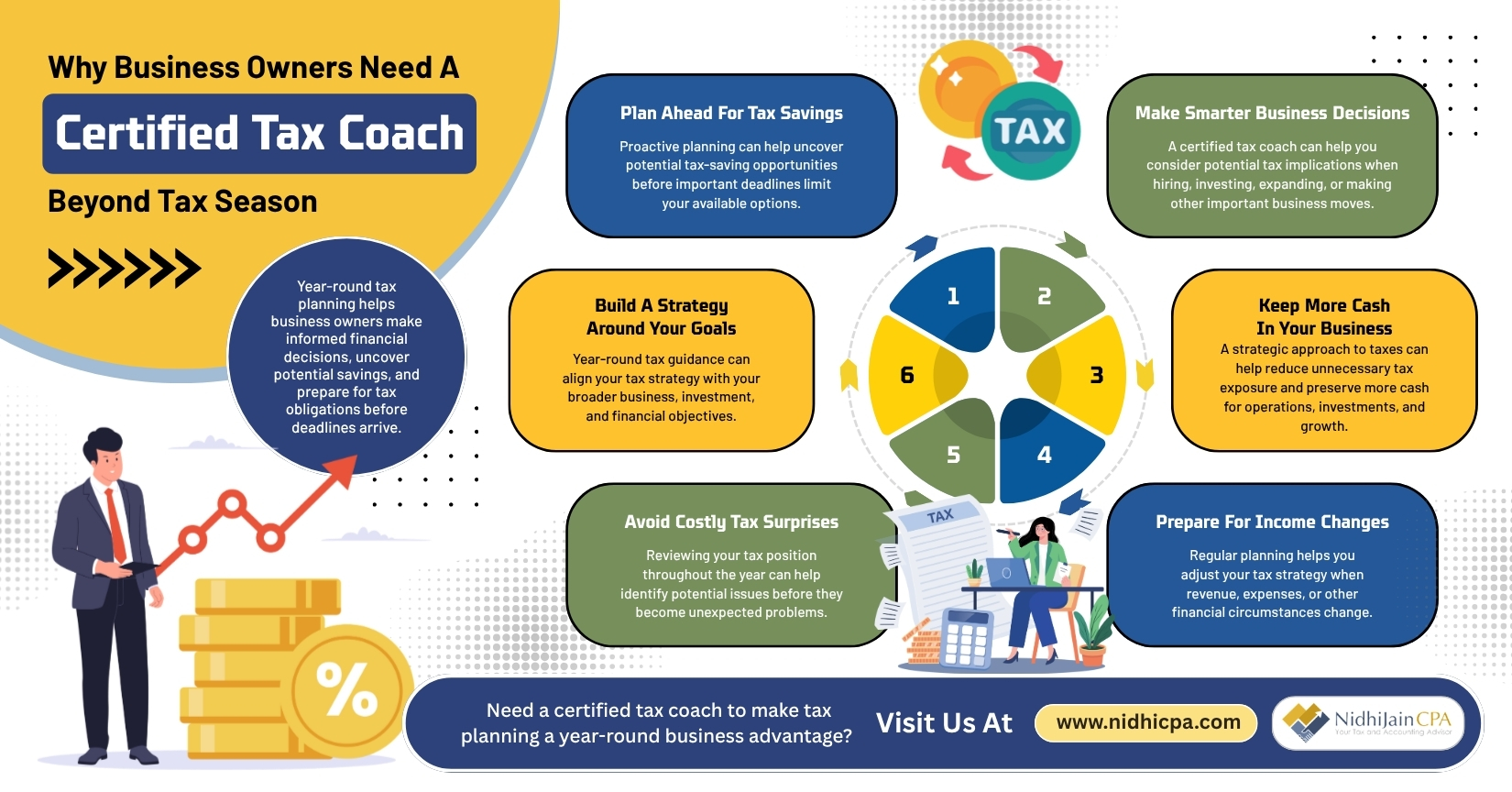
Many business owners think of taxes only during filing season. Once returns are submitted, taxes often move to the bottom of the priority list until the following year. However, working with a tax accountant in California involves much more than preparing and filing tax returns. …