Blogs

a person in a jacket working on their tablet

The modern financial landscape of Silicon Valley moves at the speed of software, and traditional, manual accounting methods no longer suffice for high-growth ventures. As we move through 2026, the shift toward tech-enabled tax planning has transitioned from a luxury to a baseline requirement for staying competitive. You must move away from static spreadsheets and toward integrated, cloud-based ecosystems that provide real-time visibility into your liabilities. …

tax documents on a black surface

Ignoring past tax obligations can lead to a compounding cycle of debt that threatens the very existence of a Bay Area enterprise. As the IRS and California’s Franchise Tax Board (FTB) modernize their automated enforcement systems in 2026, the window for quiet disclosure is rapidly closing. You must recognize that waiting for a formal notice of deficiency is the most expensive way to handle a financial discrepancy. Adopting a mindset of proactive back tax management allows you to seize control of the narrative, often leading to significantly reduced penalties compared to those discovered during an involuntary audit. …

California residents face some of the most complex tax structures in the United States, where high state income brackets and unique credit opportunities require a precise approach. As the 2026 fiscal year introduces adjustments to standard deductions and changes to the state and local tax (SALT) landscape, simply “getting it done” is no longer a viable strategy for wealth preservation. Navigating the California personal tax guide requires you to look beyond federal filings and understand how state-specific mandates affect your net take-home pay. By staying proactive, you transform a mandatory compliance task into a strategic opportunity to protect your family’s financial future. …

Running a small business comes with constant financial movement, and staying organized is what keeps everything on track. A strong end-of-quarter bookkeeping routine helps you understand where your money is going, what is working, and what needs attention before small issues turn into bigger problems.

For many business owners, especially those handling complex business taxes and bookkeeping, the end of each quarter is the perfect time to pause, review, and reset financial systems for better clarity and control.

Review and Organize Financial Records

Start by gathering all your financial documents for the quarter. This includes invoices, receipts, bank statements, and expense records. Make sure everything is properly categorized and stored. When your records are organized, it becomes much easier to track spending patterns and identify missing information. Clean records also save time when filing taxes or making financial decisions.

Reconcile Bank and Credit Card Accounts

Account reconciliation is one of the most important steps in your checklist. Compare your internal records with bank and credit card statements to ensure every transaction matches. If you notice discrepancies, investigate them right away. This process not only keeps your books accurate but also helps catch errors or fraud early.

Evaluate Income and Expenses

Take a close look at your revenue streams and expenses. Identify which areas are generating the most income and where you might be overspending. This is also a great time to cut unnecessary costs and reallocate funds to more profitable areas. A clear understanding of your financial position allows you to make smarter business decisions moving forward.

Check Accounts Receivable and Payable

Review outstanding invoices and follow up on any late payments. Keeping your accounts receivable in check improves cash flow and reduces financial stress. At the same time, ensure all your bills and vendor payments are up to date. Staying on top of payables helps maintain good relationships and avoids late fees.

a person marking AR and AP on paperwork

Prepare for Taxes

Quarterly bookkeeping plays a key role in staying tax-ready. By reviewing your financials now, you can estimate your tax obligations and avoid surprises later. Many businesses benefit from professional tax planning services to identify deductions and reduce liabilities. In addition, staying organized supports smoother filing when it is time to handle business taxes.

Analyze Financial Reports

Generate key financial reports such as profit and loss statements and cash flow summaries. These reports give you a snapshot of your business performance over the quarter. Use them to track growth, spot trends, and set realistic goals for the next period. This step ensures your end-of-quarter bookkeeping process delivers real insights, not just numbers.

Plan for the Next Quarter

Once your books are clean and updated, use that information to plan ahead. Set financial goals, adjust budgets, and create strategies based on your findings. A proactive approach helps your business stay agile and prepared for changes in the market.

Take the Next Step Confidently

A consistent quarterly routine keeps your finances accurate, reduces stress, and improves decision-making. Whether you need help with Bay Area bookkeeping and accounting, guidance from an experienced accountant in San Jose, California, or support with tax planning, building a reliable system is key.

We at Nidhi Jain CPA are here to simplify your end-of-quarter bookkeeping and keep your business financially strong. Contact us today and get started with a more proactive bookkeeping approach.


The shift in the 2026 fiscal environment makes selecting a financial partner a high-stakes decision for any Silicon Valley resident. As federal tax laws evolve and temporary provisions expire, the difference between a standard filing and a strategic roadmap becomes clear. You need more than someone who can input numbers into a software program; you require an advocate who understands the nuances of the local tech economy and the global footprint of modern families. Identifying the best San Jose tax consultant ensures that your strategy remains resilient against legislative volatility while protecting your long-term wealth. …

Successful business ownership in the Bay Area requires more than a great product; it demands a crystal-clear view of your financial health. Many entrepreneurs treat their records as a historical archive to be dealt with only in April, but this reactive approach often leads to missed opportunities. When you transition to a system that prioritizes real-time data, you gain the ability to pivot quickly in a competitive market. High-quality bookkeeping and accounting serve as the GPS for your business, showing you exactly where your cash is flowing and where it might be leaking. By implementing smart bookkeeping strategies, you transform an administrative chore into a powerful engine for growth. …

A photo showing a pen placed over a few envelopes

For years, California homeowners have felt the pressure of the federal SALT deduction cap. With high property values and higher state and local taxes, many Bay Area families could not deduct the full amount they paid in property and state income taxes on their federal returns. New federal tax law changes now bring meaningful SALT cap relief, including a permanent increase in deductible limits. At Nidhi Jain CPA, we focus on translating these updates into clear planning opportunities for homeowners and business owners alike. …

A photo showing two elderly people discussing something with a consultant

Higher interest rates have changed how businesses think about borrowing. Loans for equipment, expansion, real estate, and working capital now carry heavier payment burdens than they did just a few years ago. But recent federal tax law updates have made the business interest deduction rules more favorable again. Under revised Section 163(j) computations, many companies can deduct more of their interest expense in 2026 and beyond. At Nidhi Jain CPA, we translate these technical changes into practical planning moves for business owners. …

A photo showing a woman working on a laptop and a calculator

Business equipment purchases are not just operational decisions — they are tax strategy decisions. Updated federal depreciation rules now allow many businesses to deduct the full cost of qualifying equipment in the year it is placed in service instead of spreading deductions over several years. That timing difference alone can mean thousands of dollars in tax impact. At Nidhi Jain CPA, we guide business owners to align purchase timing with tax efficiency and long-term planning goals. …

Digital payments are now a normal part of doing business. From Venmo and PayPal to crypto platforms and app-based transfers, money moves faster than ever — and the IRS has updated how it tracks and verifies these transactions. Beginning with new federal reporting rules rolling into the 2026 filing season, digital transactions are more visible to regulators. We regularly help clients understand what this means in practical terms and how proper documentation prevents tax surprises. …

Major federal tax changes are arriving with the implementation of the One Big Beautiful Bill (OBBB) Act, effective for the 2026 tax filing season. One of the most discussed provisions removes federal income tax on qualified tips and overtime earnings. This update is designed to increase take-home pay while reshaping how individuals and businesses approach tax planning in a changing economic environment. At Nidhi Jain CPA, we focus on helping clients understand how these changes fit into broader financial and business strategies. …

Bookkeeping Lifecycle

Bookkeeping often stays unnoticed until deadlines approach, creating pressure and increasing the risk of errors or compliance issues. A proactive and structured approach keeps records accurate, reduces risk, and ensures financial clarity at all times. …

tax strategy

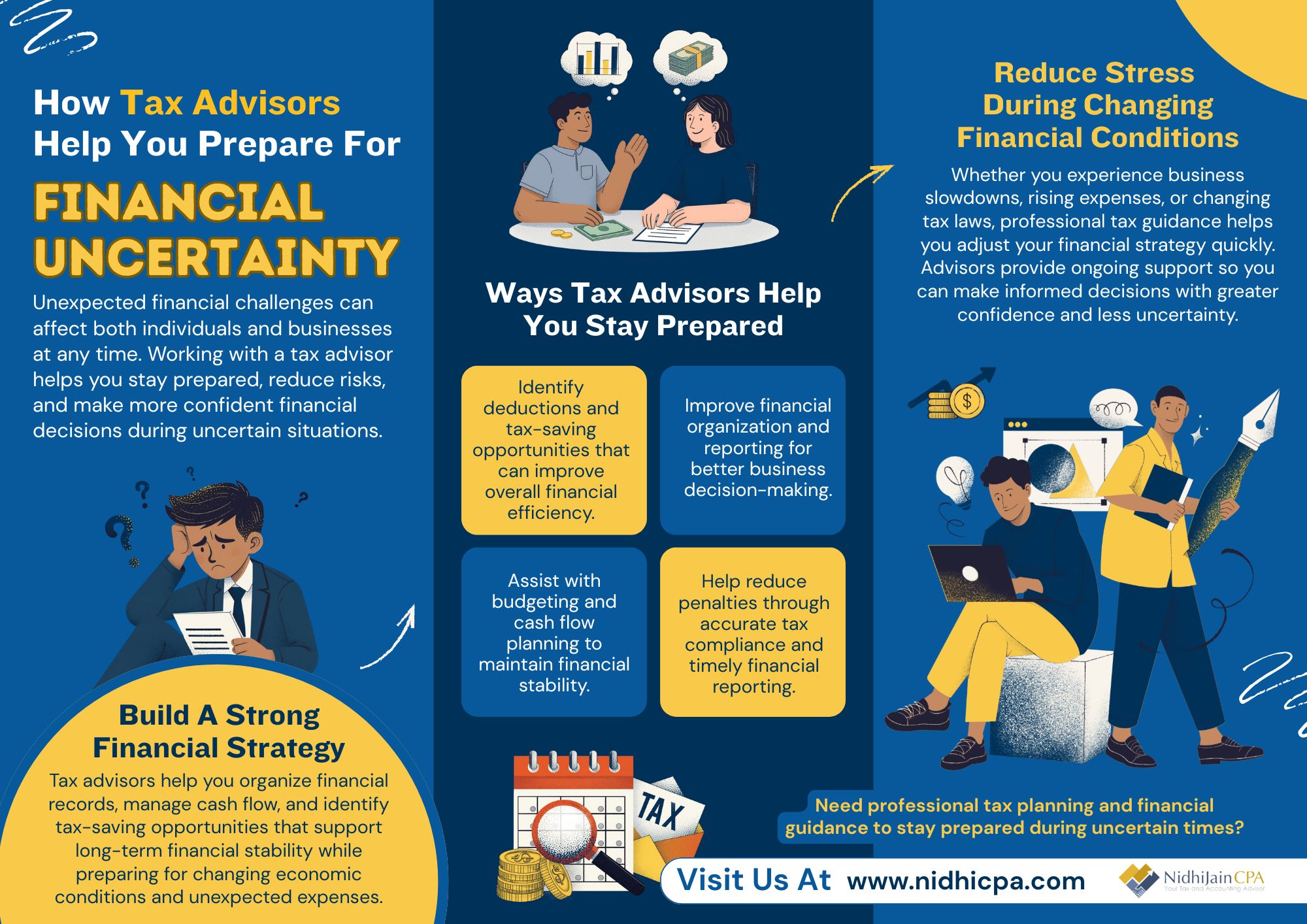
Your financial goals, income, and life circumstances are unique, and your tax strategy should reflect that. A personalized, proactive approach helps you plan beyond tax season, adapt as your goals change, and make confident financial decisions year-round. …

2 people discussing something on a table

For many business owners, tax season is often reduced to a last-minute scramble to submit returns on time. While compliance is essential, focusing solely on filing overlooks the significant advantages of year-round planning. Businesses that integrate continuous tax planning services with accurate recordkeeping and forecasting gain stronger financial stability, maximize deductions, and minimize liabilities. A qualified consultant provides guidance beyond filing, helping companies anticipate challenges, align payments with cash flow, and implement strategies that support sustainable growth. …