
Tax Planning for Businesses: Plant the Seeds for Future Savings

A tax planner in San Francisco at work.

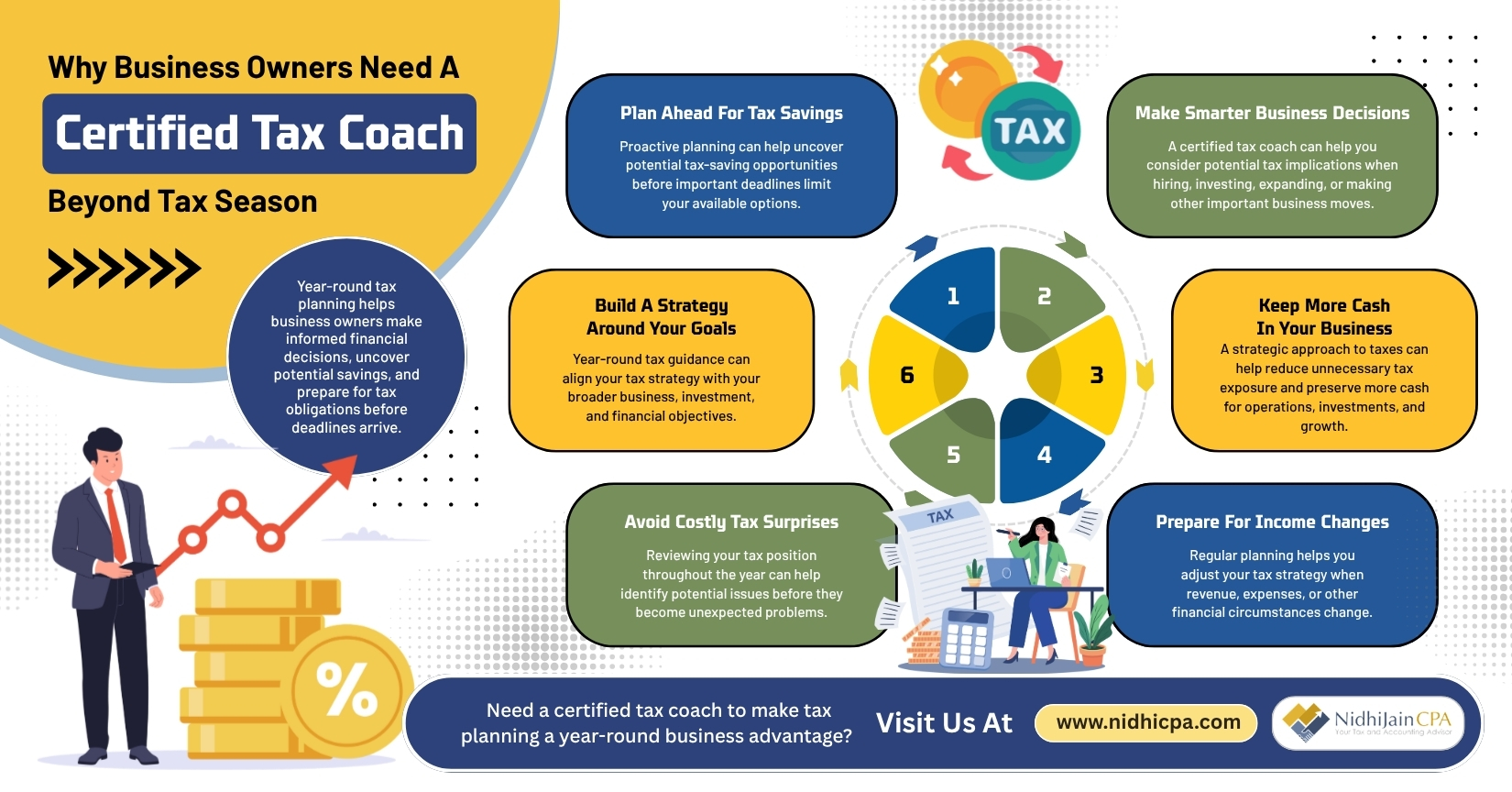
The hustle of running a business often leaves little time to contemplate the complexities of tax season. However, proactive tax planning throughout the year can be a game-changer, planting the seeds for significant future savings for your Bay Area business. Just like nurturing a garden, effective tax planning requires consistent effort and strategic decisions.

This blog post will serve as your guide to understanding the importance of tax planning for businesses and explore strategies to optimize your tax situation.

Why Tax Planning Matters for Your Bay Area Business

Tax planning goes beyond simply filing your tax return on time. Here’s how it empowers your business:

  • Reduced Tax Liability:A well-defined tax plan allows you to identify and leverage tax deductions and credits, resulting in a lower tax bill come April.
  • Improved Cash Flow:By anticipating your tax burden, you can allocate funds accordingly and avoid last-minute financial strain.
  • Informed Investment Decisions:Understanding your tax implications allows you to make informed financial decisions regarding investments, resource allocation, and business expansion plans.
  • Peace of Mind:Knowing you’ve taken proactive steps to minimize your tax liability provides a sense of security and allows you to focus on growing your business.

Planting the Seeds for Savings: Tax Planning Strategies

Start Early and Stay Organized

Don’t wait until tax season to gather your records. Maintain an accounting and bookkeeping system that meticulously tracks all business expenses throughout the year. This ensures you have readily available documentation to claim all eligible deductions.

Understand Your Tax Code

Understanding the tax code applicable to your business structure is crucial. Partnering with a skilled CPA in the Bay Area can help you navigate the complexities of tax laws and identify potential tax-saving opportunities.

A tax accountant at work.

Maximize Deductions and Credits

Many business expenses are tax-deductible, including employee benefits, marketing costs, and research & development expenses. Explore all available tax credits specific to your industry or location.

Consider Business Structure

The legal structure of your business (sole proprietorship, LLC, corporation) can impact your tax liability. Consult with a tax advisor to determine the most tax-efficient structure for your business.

Take Advantage of Pre-Tax Benefits

Offering health insurance, retirement plans, and dependent care accounts to your employees can reduce your taxable income while providing valuable benefits.

Let Nidhi Jain CPA Help Your Business Grow

Effective tax planning requires ongoing guidance and expertise. Nidhi Jain CPA, a reputable tax consultant in the Bay Area, offers a wide range of services designed to empower businesses with future-focused tax strategies.

She works closely with you to understand your business and do personalized tax planning that minimizes your tax burden and maximizes your long-term financial benefits.Nidhi Jain CPA goes beyond basic compliance. She identifies tax-saving opportunities throughout the year, allowing you to make informed financial decisions.

Don’t wait until tax season arrives to address your tax situation. Contact Nidhi Jain CPA today for tax advisory and plant the seeds for a future of tax savings and financial growth for your Bay Area business!

Related Blogs

Running a business in California has become more expensive than it was just a few years ago. In March 2026, inflation rose to 3.3%, driven largely by higher gasoline prices linked to global supply disruptions. Rising fuel prices, higher borrowing costs, and increasing payroll expenses continue to put pressure on businesses across the state. When expenses rise this quickly, tax planning becomes more important than ever. Waiting until tax season can mean missed deductions, cash flow challenges, and higher tax bills. …

The thought of an IRS audit can make any taxpayer nervous. While audits are relatively uncommon, certain reporting patterns and inconsistencies can increase IRS audit risk. Understanding these common red flags can help individuals and business owners file more accurately and reduce the likelihood of attracting unwanted attention from the Internal Revenue Service.

It is important to remember that an audit does not automatically mean wrongdoing. In many cases, the IRS simply wants clarification or supporting documentation. However, accurate reporting and proper recordkeeping remain essential.

Significant Income Reporting Discrepancies

One of the most common audit triggers occurs when information reported on a tax return does not match records received by the IRS.

Examples include:

  • Missing W-2 income
  • Unreported 1099 earnings
  • Incorrect investment income reporting
  • Discrepancies between tax returns and third-party records

The IRS uses automated systems to compare reported income against information submitted by employers, banks, and other entities. Even small mismatches can generate questions.

Excessive Deductions Relative to Income

Claiming legitimate deductions is an important part of tax planning. However, deductions that appear unusually large compared to reported income may increase audit scrutiny.

Common areas include:

  • Business expenses
  • Charitable contributions
  • Home office deductions
  • Vehicle expenses

A tax planning consultant in Bay Area can help ensure deductions are properly documented and supported by records if questions arise later.

Repeated Business Losses

Businesses occasionally experience losses, particularly during startup years or periods of economic uncertainty. However, reporting losses year after year may attract additional attention.

The IRS may question whether:

  • The activity is being operated as a business
  • The business has a profit motive
  • Expenses are being classified correctly

This is one reason many business owners work with a tax accountant professional to maintain accurate records and reporting practices.

Cash-Intensive Businesses

Businesses that handle large amounts of cash often face higher audit risk because cash transactions can be more difficult to verify.

Examples include:

  • Restaurants
  • Retail operations
  • Personal service businesses

Accountant reviewing business financial statements and tax documents

Maintaining organized bookkeeping records and strong internal controls can help demonstrate accurate income reporting. Reliable bookkeeping practices play an important role in supporting compliance.

Mathematical Errors and Incomplete Returns

Simple mistakes remain one of the easiest ways to attract IRS attention.

Common errors include:

  • Incorrect calculations
  • Missing schedules or forms
  • Wrong Social Security numbers
  • Filing status mistakes

Carefully reviewing returns before submission helps reduce avoidable issues. Many taxpayers rely on tax and accounting services to improve accuracy and minimize filing errors.

Large International Transactions

International reporting requirements continue to receive significant IRS attention. Foreign accounts, overseas investments, and certain international financial transactions often require additional reporting.

Failure to disclose required information can create compliance concerns and increase audit risk. Working with an international tax accountant in Bay Area can help ensure reporting obligations are met correctly.

Reducing IRS Audit Risk Through Good Tax Practices

While no strategy can guarantee that an audit will never occur, several practices can help reduce risk:

  • Maintain complete financial records
  • Report all income accurately
  • Keep supporting documentation for deductions
  • Reconcile financial statements regularly
  • Use proactive tax planning services

Businesses that prioritize accurate bookkeeping and consistent reporting are generally better positioned if questions arise.

Stay Prepared with Professional Tax Guidance

Understanding the factors that contribute to IRS audit risk allows individuals and businesses to take a more proactive approach to compliance. At Nidhi Jain CPA, we provide strategic tax planning in Bay Area, and comprehensive solutions to help clients navigate tax obligations with confidence. Whether you need assistance with reporting, compliance, or long-term planning, our goal is to help you stay prepared and reduce unnecessary tax risks. Contact us today to learn more.

Receiving a notice from the Internal Revenue Service (IRS) can be stressful for both individuals and business owners. Whether the notice relates to a filing discrepancy, unpaid taxes, or a request for additional information, many people are unsure how to respond. This is where IRS representation becomes valuable. …