
Is Your Tax Strategy Ready for AI-Powered Audits?

people going over graphs

The IRS is adopting automation, machine learning, and advanced data-matching tools to review tax returns faster and more accurately than ever. This shift means business owners must ensure their records and filings are consistent, verifiable, and transparent. Working with a proactive CPA helps reduce risk and strengthen compliance as audit technology becomes more advanced.

How AI Changes the Audit Process

AI-driven audit systems analyze data from multiple sources in seconds. They compare return entries with payroll data, third-party payments, bank reports, and past filing patterns. Even minor inconsistencies can trigger automated flags. A skilled CPA reviews filings with the same attention to detail these systems use, helping clients submit accurate records before the IRS reviews them electronically.

Automation also increases the speed of audits. Instead of waiting months for manual screening, businesses may receive inquiries sooner. A Tax Consultant helps clients maintain documentation that supports deductions, credits, and income reporting, reducing stress during these digital checks.

Why Accuracy Matters More Than Ever

With AI reviewing line items in large datasets, incomplete documentation or inconsistent figures stand out quickly. This is why many businesses now rely on professionals such as a certified public accountant to conduct regular reviews. These professionals help correct errors, reconcile accounts, and identify reporting gaps early.

Accurate records also support stronger compliance with tax and accounting services, especially for businesses tracking multiple revenue streams or deductible expenses. A Tax Consultant ensures numbers match across bookkeeping systems and bank data so AI-driven audits do not raise questions.

The Role of a CPA in Strengthening Compliance

A proactive CPA helps clients prepare for digital-era audits by building organized tax files, maintaining consistent records, and improving reporting accuracy. They guide business owners in documenting deductions, classifying expenses correctly, and maintaining receipts for all major transactions. Their oversight reduces the likelihood of misreporting.

Businesses working with professionals such as accountants, a tax consultant, or a tax advisor benefit from structured compliance practices. These experts understand IRS triggers and help clients adopt systems that match agency expectations.

Why a Strong Tax Strategy Matters

AI-powered audits reward businesses with consistent records, clear reporting, and organized financial systems. They penalize those with missing data, late corrections, or inaccurate entries. A Tax Consultant helps clients create a tax strategy that supports strong compliance year-round.

This includes maintaining accurate bookkeeping, reviewing transactions regularly, and aligning filings with IRS standards. When combined with tax planning services, this approach helps businesses avoid unnecessary penalties and withstand automated audits with confidence.

calculator on top of dollar bills

Strengthen Digital-Age Compliance with Nidhi Jain CPA

Nidhi Jain CPA helps business owners prepare for AI-driven audits with organized reporting, strong documentation, and strategic oversight. With professional support from one of the best CPA providers, businesses gain clarity, reduce filing risks, and maintain confidence as audit technology evolves.

Stay ahead of digital-era audits with accurate books and stronger compliance support. Contact us today for smarter filing, better protection, and year-round peace of mind.
Related Blogs

Business professional calculating operating costs while reviewing financial documents

Higher operating costs do more than reduce profit. They can also make last quarter’s tax estimate outdated. In the Los Angeles area, consumer prices were 3.3% higher in June 2026 than one year earlier. Energy prices rose 15.1% during the same period, according to the U.S. Bureau of Labor Statistics.

Higher fuel, insurance, rent, inventory, and borrowing costs now compete for the cash needed for taxes. This is where corporate tax planning becomes important. Waiting until filing season may leave little time to correct payments, document expenses, or plan purchases.

Update Tax Projections as Costs Change

Do not rely on a tax estimate prepared at the start of the year. Review revenue, gross margin, financing costs, and operating expenses every quarter.

If profit falls, estimated payments may need adjustment. If revenue rises faster than expenses, the company may need to reserve more cash. Regular tax planning can reduce underpayment risk and avoid unnecessary overpayments.

Record Deductible Expenses Correctly

The IRS generally allows deductions for ordinary and necessary business expenses. However, the timing and treatment of each cost can differ.

Rent, utilities, insurance, software, professional fees, and advertising may be currently deductible. Major improvements, equipment, and certain startup costs may need to be capitalized or deducted over time.

Hand holding a pen over a printed business expense report with financial charts

Keep records showing the amount, date, vendor, and business purpose. A tax planning consultant can help separate repairs from improvements and business costs from personal spending.

Review the Tax Cost of Financing

Higher interest rates increase the cost of loans for equipment, inventory, and expansion. Business interest is often deductible, but Section 163(j) may limit the amount some taxpayers can claim in the current year. Disallowed interest may need to be carried forward.

Before taking on debt, compare the after-tax interest cost with expected cash flow. Corporate tax planning should account for deduction limits, loan terms, and future payment pressure.

Time Equipment Purchases With Care

A tax deduction should not be the only reason to buy an asset. Confirm that the purchase supports operations and fits the budget. Then review the placed-in-service date, Section 179 eligibility, first-year depreciation, and future deduction needs.

Tax planning services can compare an immediate write-off with deductions spread across later years.

Control Rising Costs With Nidhi Jain CPA

Nidhi Jain CPA provides corporate tax planning for companies facing higher expenses and financing costs. Work with a tax planning consultant to review deductions, estimated payments, asset purchases, and cash needs before filing deadlines limit your options.

Contact our dedicated tax planning consultant from Nidhi Jain CPA.

Borrowing becomes less forgiving when interest rates stay elevated. The Federal Reserve’s H.15 release listed the bank prime loan rate at 6.75% in July 2026. Many business loans are priced in relation to prime, so weak financial records can become costly when lenders review repayment risk closely.

A profitable business may still struggle to qualify for financing if its books are incomplete. Missing invoices, unreconciled accounts, or unclear owner transactions can make cash flow look weaker than it is. Accurate Bay Areabookkeeping services give lenders and a CPA a clearer view of the company’s financial position.

Clean Records Strengthen Loan Applications

Lenders commonly review income statements, balance sheets, cash flow statements, debt obligations, and tax returns. The U.S. Small Business Administration advises established businesses to include historical financial statements when preparing a business plan for financing.

Professional bookkeeping services help ensure that revenue, expenses, assets, and liabilities are recorded consistently. This reduces differences between accounting reports, bank statements, and tax filings. A lender can then assess how much cash the business produces and how much debt it can support.

A bookkeeping consultant holding a pen while working on tax documents using a laptop and calculator

Accurate Books Support Better Refinancing Decisions

Refinancing can lower a payment, change the repayment period, or replace short-term debt. It can also add fees or increase total interest.

Before refinancing, bookkeeping and accounting records should show each loan balance, interest rate, monthly payment, maturity date, and collateral requirement. These details help a certified public accountant compare the current debt with the proposed loan.

Without current records, a business may focus only on the new monthly payment and overlook the full financing cost.

Cash Flow Becomes More Important

High interest charges reduce the cash available for inventory, rent, taxes, and growth. Monthly bookkeeping should track cash collected, upcoming bills, overdue invoices, loan payments, and seasonal changes.

A rolling cash flow forecast can show when the business may face a shortfall. Owners can then follow up on receivables, delay nonessential spending, or discuss financing before cash becomes tight.

Financial Errors Can Affect Loan Terms

Duplicate expenses, missing sales, and incorrect loan entries can distort profit and debt levels. These errors may affect lender ratios or lead to repeated information requests.

Regular reconciliations and monthly reviews help catch problems early. A CPA can also explain unusual changes and prepare records for lender questions.

Build Lender-Ready Records With Nidhi Jain CPA

Nidhi Jain CPA provides bookkeeping in Bay Area for businesses seeking stronger cash flow visibility, financing, or refinancing. Our bookkeeping and accounting support helps organize financial statements, reconcile accounts, and prepare records lenders can review with confidence. Work with our certified public accountant who can connect accurate numbers with informed financing decisions.

Contact us now.

Tax documents, coins, and Tax written on wooden blocks placed on a green surface

Higher prices can reduce profit long before a tax return is due. In the Los Angeles area, consumer prices were 3.3% higher in June 2026 than one year earlier. Energy prices rose 15.1% during the same period, according to the U.S. Bureau of Labor Statistics.

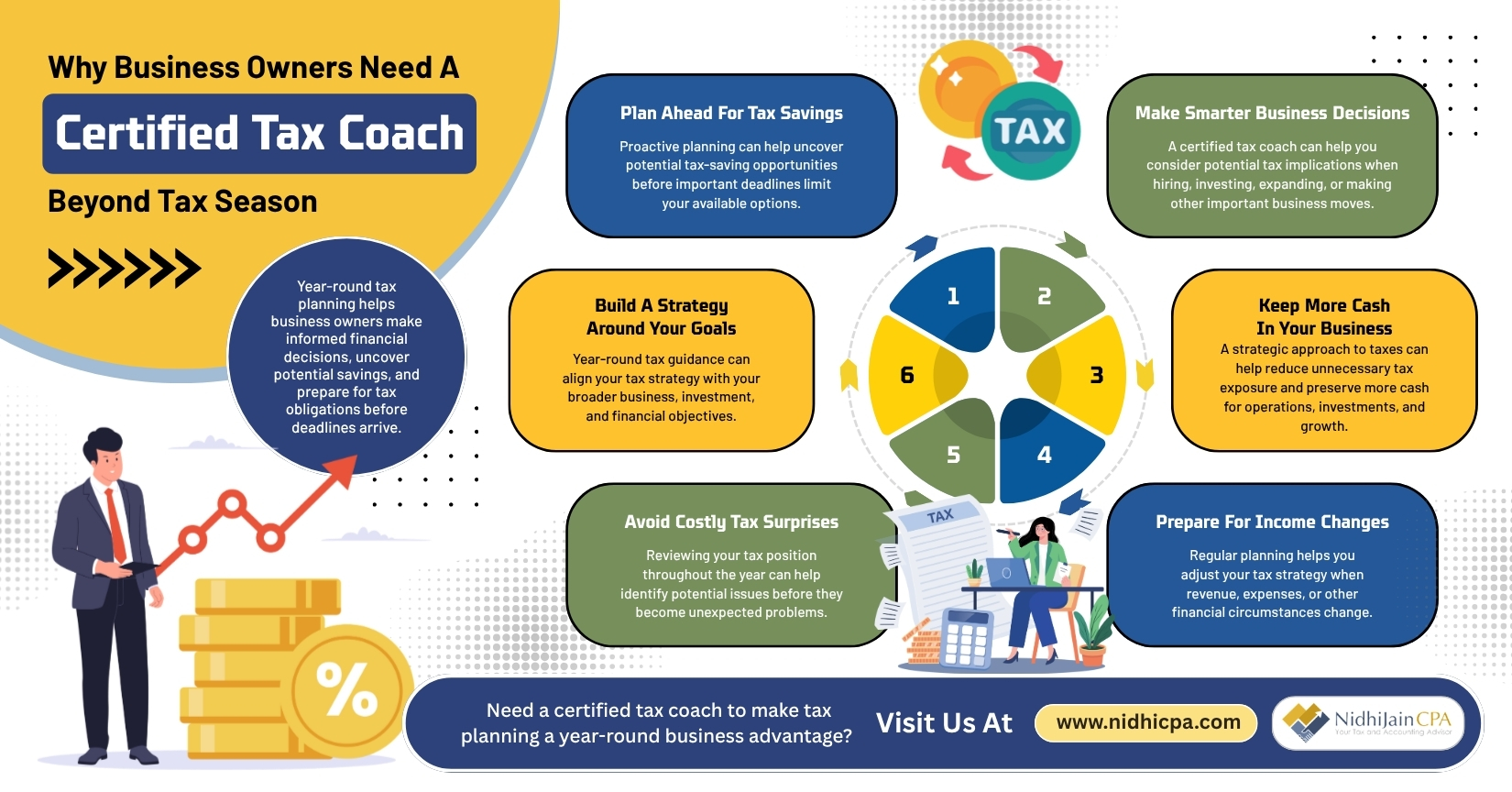
For California business owners, rising fuel, insurance, rent, and financing costs can make yesterday’s tax estimates inaccurate. Waiting until filing season leaves little time to adjust. Year-Round Tax Planning in California gives owners regular chances to protect cash flow, correct payments, and act before important deadlines pass.

Match Estimated Taxes to Current Results

Estimated payments based on last year’s profit may no longer fit the business. A stronger or weaker quarter can change federal and California obligations.

Quarterly tax planning reviews compare current income, deductions, credits, and payments. This can reduce the risk of underpayment penalties. It may also prevent unnecessary overpayments that remove cash from daily operations.

Act Before Deduction Deadlines Pass

Many tax decisions must occur during the tax year. Equipment may need to be placed in service before year-end. Retirement plans and contributions may have separate setup or funding deadlines. Owner compensation and employee benefits may also require action before tax forms are issued.

A tax planning consultant can review planned purchases, depreciation choices, retirement contributions, and expense records while there is still time to act. Filing a return months later cannot recreate a missed deadline.

Tax documents, coins, and Tax written on wooden blocks placed on a green surface

Account for Federal and California Differences

California does not automatically adopt every federal tax change. Senate Bill 711 moved the state’s general conformity date to January 1, 2025. However, federal laws enacted after that date may still receive different California treatment.

These differences can affect deductions, credits, depreciation, and taxable income. Year-Round Tax Planning in California helps businesses track federal and state treatment separately rather than assuming one calculation works for both returns.

Review Decisions Before the Business Changes

Hiring employees, opening another location, buying assets, or selling in new states can create added filing and payment duties. Tax planning services allow these decisions to be reviewed before contracts are signed.

Plan Ahead With Nidhi Jain CPA

Nidhi Jain CPA provides year-round tax planning in California for business owners facing higher costs and changing tax rules. Work with our tax planning consultant to review estimates, deductions, purchases, and filing duties before valuable options expire.

Contact a dedicated tax planning consultant from Nidhi Jain CPA.