
Do Business Owners Really Need Tax Planning Services?

Man looking at the laptop

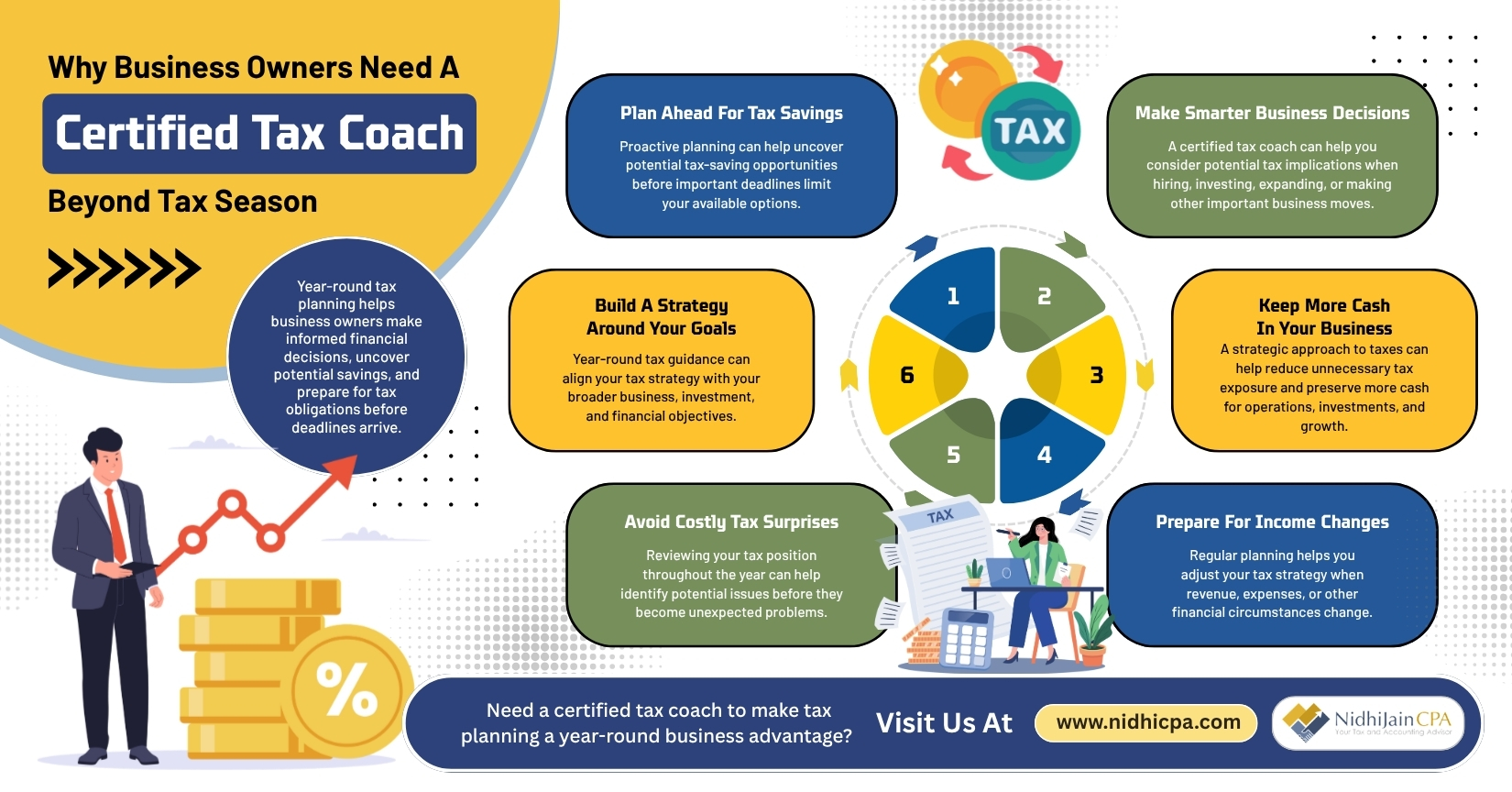
Regardless of how far the deadline for filing your taxes may be, the two best times to get a jump on tax planning are ‘now’ and ‘all the time.’ Taxes are the last thing overworked business owners want to think about once they’ve submitted their returns. However, thinking about tax season and planning early can make a monumental difference for your bottom line. Depending on the circumstances, it could also lead to a significant reduction in taxes, which means the availability of more money for streamlining business growth. Before diving into the sea of benefits outsourcing tax planning offers, let’s understand what the term entails.

What is Tax Planning?

Tax planning involves much more than just coming up with a year-end estimate for tax liabilities or how much one needs to leave aside to pay taxes. It includes looking at the entire financial situation to ensure all facets work cohesively to ensure you’re required to pay the least possible tax amount come tax time.


The tax planning experts consider many factors, such as the timing and size of purchases, credit and deduction opportunities, expense planning, and more. They can help you select optimal retirement and investment plans that complement your overall filing status and financial strategy. Businesses often don’t have simple returns, so seeking the expertise of a professional can save money, time, and potential legal complications. Here’s why businesses of all sizes should look into outsourcing tax planning services rather than going with the DIY approach.

#1- Tax Planning Services Help Save Time

Time is the most valuable resource for business owners, especially SMEs, where the owners juggle to complete various critical tasks on their own to save money. There is no need to experiment, especially with something as important and complex as tax planning. Tax planning experts will know all about the potential deductions your business would be entitled to. They’ll also be well-versed in tax laws, helping your business remain compliant. Outsourcing to a professional tax planner would help free up your time, allowing you to focus on managing and growing the business.

#2 Tax Planning Services Develop Tax Reduction Strategies to Save You Money

According to statistics, people who do their own tax preparation or planning often overspend. This is because most business owners aren’t aware of the opportunities for credits, deductions, and other provisions available to businesses. Tax laws constantly change, making it difficult to keep up with them when finding new tax-saving strategies. Professionals at outsourcing CPA firms stay updated with the latest happenings in the tax world to ensure legally sound tax reduction strategies are used to reduce the liability of business owners.

Tax advisor discussing strategies


#3 Tax Planning Services Help Avoid Costly Errors

All businesses operate on a budget. Business owners often decide to do their own tax preparation and planning to save money. If you’re not a tax expert, chances are you could make the mistake of adding a deduction your business isn’t legally entitled to. Such errors could be very costly for your business. The repercussions for minor errors and false deductions are often severe and can end up costing the business. You could face audits or just wind up paying more than you had to in taxes. Tax planning experts help avoid such errors as they possess intimate knowledge of tax laws to help ensure you only take credits and deductions you’re entitled to and avoid other common, costly mistakes.

#4 Tax Planning Services Can Help Prepare for the Future

Businesses are constantly evolving, and even minor changes significantly affect a business’s tax situation. Working with tax consultants helps businesses prepare for all likely situations ahead of time, regardless of whether you’re planning to expand to a new location or launching and choosing a new type of entity. Even if you’re moving your business, planning to launch a new product, investing in R&D, or want to defer some business income, tax planning services by Nidhi Jain CPA can be especially useful.


Our team of tax consultant in San Jose can help you understand how changes within your business strategy or operation could impact taxes and whether there are legitimate strategies that can help keep taxation liabilities to a minimum.


Call us or email us right away to learn about our comprehensive cloud-based solutions. We also offer back tax solutions, tax filing, tax consultation, payroll services, personal and business accounting, and bay area bookkeeping, among many other services, to clients across the Bay Area, San Francisco, the USA at cost-effective rates.


 

Related Blogs

Submitting paper tax returns is quickly becoming a thing of the past. Today, digital filing is the preferred method for businesses because it is faster, more accurate, and easier to track. According to the Internal Revenue Service, more than 94% of individual tax returns are filed electronically, reflecting the widespread shift toward digital filing across the United States. Electronic filing also allows faster processing and reduces common errors caused by incomplete or inaccurate information.

For small and medium-sized businesses, this shift offers more than convenience. It helps reduce costly filing mistakes, speeds up processing, and keeps financial records better organized throughout the year. If your business tax return filing process still depends on paper documents or last-minute manual entries, it may be time for a better approach.

Fewer Errors Through Automatic Validation

One of the biggest advantages of electronic filing is built-in error checking.

E-filing systems automatically identify issues such as:

  • Missing information
  • Invalid tax identification numbers
  • Mathematical errors
  • Incomplete forms

Correcting these problems before submission reduces the likelihood of rejected returns and processing delays.

Combined with proper tax planning, electronic filing creates a smoother and more accurate filing process.

Faster Processing and Quicker Confirmations

Paper returns often take longer to process because they require manual handling.

With electronic filing:

  • Returns are submitted immediately
  • Filing confirmations are received electronically
  • Processing generally begins sooner

This gives business owners greater confidence that their returns have been successfully received.

A calculator, coins, and US dollars on top of a paper with Taxes written on it

Better Recordkeeping Throughout the Year

Digital filing works best when supported by organized financial records.

Many accounting platforms automatically store:

  • Income records
  • Expense reports
  • Supporting documents
  • Prior tax returns

Having everything in one place simplifies future business tax return filing and reduces time spent searching for paperwork.

Stronger Data Security

Paper files can be misplaced or damaged.

Secure electronic filing systems use encryption and authentication measures to help protect financial information during transmission.

Businesses should also:

  • Use secure passwords
  • Enable multi-factor authentication
  • Back up financial records regularly

These simple steps add another layer of protection for sensitive tax information.

Pair E-Filing With Year-Round Tax Planning

Electronic filing improves the filing process, but it cannot replace proper planning.

Working with tax planning services throughout the year helps businesses:

  • Track deductions
  • Prepare estimated tax payments
  • Organize financial records
  • Reduce filing surprises

A tax planning consultant reviews financial information before filing season, allowing time to correct issues instead of rushing to meet deadlines.

Digital Filing Is More Than Convenience

Electronic filing helps businesses stay organized, improve accuracy, and reduce unnecessary delays. Combined with consistent recordkeeping and regular tax planning, it creates a smoother tax process and supports better financial decisions throughout the year.

Simplify Your Business Tax Return Filing with Nidhi Jain CPA

At Nidhi Jain CPA, we make business tax return filing simple, accurate, and efficient. Our team combines modern electronic filing with year-round tax planning services to help businesses reduce errors, stay compliant, and prepare for future growth.

Contact our dedicated tax planning consultant that works closely with you to organize records, identify tax-saving opportunities, and make every filing season less stressful.

Running a business across state lines has become much easier thanks to remote work, online sales, and digital services. Managing taxes, however, has become much harder. According to reports, more than 36 million small businesses operate in the United States, and many now generate income from customers or employees located in multiple states. At the same time, state tax rules continue to evolve following the South Dakota v. Wayfair, Inc. decision, allowing states to require tax collection based on economic activity instead of physical presence.

For business owners, this creates a common problem. You may be fully compliant in one state while unknowingly creating tax obligations in another. Without proper planning, this can lead to unexpected tax bills, penalties, and unnecessary stress.

Working with a tax advisor for multi-state businesses helps you stay ahead of these challenges before they become costly.

Understand Where Your Business Has Tax Nexus

The first step is determining where your business has tax obligations.

A tax nexus may be created through:

  • Employees working remotely
  • Warehouses or inventory
  • Sales that exceed a state’s economic threshold
  • Temporary business operations or projects

Each state sets its own rules. Meeting a filing requirement in one state does not automatically satisfy another.

Proper tax planning begins by identifying every state where your business has filing responsibilities.

Track Income by State

Businesses operating in multiple states should maintain detailed records of revenue earned in each location.

Accurate reporting helps:

  • Allocate income correctly
  • Avoid double taxation
  • Support state tax filings if questions arise

Waiting until year-end often results in incomplete records and time-consuming corrections.

Monitor Remote Employees Carefully

A single remote employee can create business tax obligations in another state.

This may require:

  • State payroll tax withholding
  • Employer registration
  • Additional business tax filings

A tax planning consultant reviews your workforce structure and identifies new filing requirements before deadlines arrive.

A smiling man talking on a phone while working remotely from home

Stay Current on State Tax Law Changes

Tax rules change regularly.

States may update:

  • Filing thresholds
  • Tax rates
  • Sales tax requirements
  • Nexus standards

Regular reviews help ensure your business remains compliant as regulations change.

This is one of the biggest advantages of working with tax planning services instead of waiting until tax season.

Maintain Consistent Financial Records

Clean financial records simplify multi-state reporting.

Keep documentation for:

  • Revenue by state
  • Payroll records
  • Business expenses
  • Sales tax collected

Good recordkeeping reduces filing errors and supports your position if a state requests additional information.

Plan Ahead Instead of Reacting

Multi-state taxation becomes more complicated as businesses grow.

Opening a new office, hiring remote employees, or expanding into another market can all create additional tax responsibilities.

A tax advisor for multi-state businesses reviews these decisions before they happen, helping reduce compliance risks and avoid unnecessary costs.

Keep Your Business Compliant with Nidhi Jain CPA

Expanding into new markets should create new opportunities, not unexpected tax problems. At Nidhi Jain CPA, our tax advisor for multi-state businesses works closely with business owners to identify filing obligations, support year-round tax planning, and provide dependable tax planning services for growing companies.

Contact our dedicated tax planning consultant that helps you stay compliant while reducing tax risks across multiple states.

Many small businesses no longer operate from just one location or through one sales channel. Today, a business might sell products in a physical store, through its own website, on online marketplaces, and even through social media. According to the U.S. Census Bureau, U.S. retail e-commerce sales, adjusted for seasonal variation, reached over $326 billion during the first quarter of 2026, showing that online sales continue to account for a significant share of business revenue.

While multiple sales channels create more opportunities, they also make hybrid business bookkeeping much more challenging. Tracking payments from different platforms, managing invoices, and reconciling bank deposits can quickly become overwhelming if records are not organized properly.

The good news is that a few simple bookkeeping habits can make managing both online and offline revenue much easier.

Keep Every Sales Channel Separate

One of the biggest mistakes hybrid businesses make is combining all sales into one category.

Instead, record revenue separately for:

  • In-store sales
  • Website orders
  • Marketplace sales
  • Social media transactions

This makes it easier to measure performance and identify which channels generate the highest revenue.

Good bookkeeping and accounting begins with accurate categorization.

Reconcile Digital Payments Regularly

Many businesses receive payments through:

  • Credit card processors
  • Digital wallets
  • Online payment platforms
  • Bank transfers

These services often deduct transaction fees before deposits reach your bank account.

A bookkeeping consultant holding a pen while working on tax documents using a laptop and calculator

Reconciling payment reports with bank deposits every week helps ensure:

  • Sales match deposits
  • Processing fees are recorded correctly
  • Missing transactions are identified quickly

This reduces errors before month-end.

Track Outstanding Invoices

Hybrid businesses often work with both immediate payments and invoiced customers.

Create a routine to monitor:

  • Unpaid invoices
  • Due dates
  • Partial payments
  • Late balances

Following up on overdue invoices improves cash flow and prevents revenue from slipping through the cracks.

Accurate bookkeeping gives you a clear picture of what has been earned versus what has actually been collected.

Record Refunds and Returns Correctly

Returns are a normal part of business, especially for online sales.

Refunds should never simply reduce your bank balance without proper documentation.

Maintain records for:

  • Original sale
  • Refund amount
  • Reason for return

This keeps financial reports accurate and prevents overstated revenue.

Use One Accounting System for Every Channel

Managing separate spreadsheets for online and offline sales often creates duplicate entries and reporting errors.

Instead, use one accounting platform that connects all revenue sources into a single dashboard.

This improves:

  • Financial reporting
  • Inventory tracking
  • Month-end reconciliation

It also simplifies hybrid business bookkeeping throughout the year.

Review Financial Reports Every Month

Do not wait until tax season to review your numbers.

Monthly reports help you:

  • Compare revenue across channels
  • Identify unusual expenses
  • Monitor cash flow
  • Correct bookkeeping errors early

Consistent reviews support better business decisions and reduce year-end stress.

Simplify Hybrid Business Bookkeeping with Nidhi Jain CPA

Managing multiple revenue streams does not have to become a bookkeeping challenge. At Nidhi Jain CPA, we help businesses build organized hybrid business bookkeeping systems that accurately track online and offline sales. Our bookkeeping and accounting services help business owners stay organized, improve cash flow visibility, and prepare accurate financial records throughout the year.

Contact us now.