
How Payroll Outsourcing Services Keep Your Company Penalty-Free & Compliant

Outsourcing payroll services offer multiple benefits to businesses, including cost reduction, time-saving, faster payroll management, and much more. However, out of all the benefits of outsourcing payroll services, penalties avoidance due to statutory compliance is the most lucrative one.

According to the IRS, the average penalty for delayed or inaccurate payroll management is approximately $935. Moreover, the concerned authorities don’t take such mistakes lightly, regardless of whether they were intentional or unintentional. Payroll must be drafted and processed according to the local and state laws pertaining to the country’s taxation, labor, and employment laws. Otherwise, you could face hefty penalties. Keep reading to learn how outsourcing payroll services to reputable CPA firms like Nidhi Jain CPA can help stay compliant.


Outsourcing CPA Firms Have Deep Legal Knowledge

Payroll preparation and management rules and regulations differ from state to state. Governing authorities make frequent amendments to develop the laws, making it difficult for business owners to stay updated while running the business. Experts at our outsourcing firms have the industry know-how and stay updated with the international and local payroll compliance laws and news, allowing them to handle payroll processing for firms across the United States


Outsourcing CPA Firms Can Help Evade Criminal Penalties

Failure to pay the payroll taxes on time or trying to avoid them through misleading activities is categorized under the criminal act of IRS. It might lead to jail time, causing you to lose potential clients, along with your business’s reputation. Professionals at Nidhi Jain CPA can help you manage the payroll accounts, ensuring you always remain compliant with tax laws. Our experts revise the payroll accounts periodically to ensure you don’t face any legal troubles on our watch.

Outsourcing CPA Firms Help Manage Payroll Accounts

Typically, businesses have multiple contractors, vendors, and freelancers attached to them, with each one requiring different payroll compliance. You may have hired one on a per-hour basis while the other on a per-project basis. The payroll accounts must be prepared based on the employment terms. Outsourcing payroll services providers keep you out of trouble, as they’re well-versed in different styles of preparing payroll accounts effectively.

Outsourcing CPA Firms Help Calculate the Right Exemptions

Companies often make mistakes in exempt and non-exempt employee recording, leading to errors in payroll accounts. Outsourcing payroll services allow access to highly qualified and competent payroll managers who can easily identify errors without hiring in-house professionals and increasing the overall operational costs.

Eventually, onboarding a reputable CPA firm helps build an excellent business reputation while avoiding penalties by remaining compliant. Connect with experienced professionals at Nidhi Jain CPA to streamline payroll services by top-notch payroll managers who will improve efficiency and authenticity in your payroll while helping you avoid numerous penalties.

Clients across the Bay Area trust us for a wide range of services including, payroll services, personal and business accounting and bookkeeping,  tax consultation, and business tax filing in bay area.

You can also call or email us to learn more about our cloud-based solutions and tax resolution services offered by highly qualified professionals at cost-effective rates.

 

Related Blogs

This photo shows some tax documents on a table.

Unpaid taxes can become increasingly difficult to manage when they are left unresolved. Interest, penalties, collection notices, and other consequences may add pressure to an already challenging financial situation. Taking action early can help taxpayers  understand what they owe and determine which options may be available based on their circumstances.

In this blog, we will discuss practical steps for addressing back taxes, why ignoring IRS obligations can create additional problems, and when professional tax resolution assistance may be appropriate.

Start by Understanding What You Owe

The first step toward resolving tax debt is determining the amount owed and understanding which tax years are affected. Taxpayers should review IRS notices, previous tax returns, account information, and available payment records. Working with a tax consultant in San Jose can also help taxpayers better understand their outstanding obligations and available options.

If past tax returns were never filed, those returns may need to be addressed before the complete tax situation can be evaluated. Gathering accurate financial information can help establish a clearer picture of the outstanding liability and support more informed tax planning services.

Do Not Ignore IRS Notices

Ignoring IRS correspondence generally does not make an unpaid balance disappear. Notices may explain the amount due, applicable deadlines, and potential collection actions. Responding promptly can give taxpayers more time to understand their circumstances and consider an appropriate response.

Taxpayers who are uncertain about what a notice means may benefit from consulting a professional who provides tax resolution services before taking action.

This photo shows some tax documents on a table.

Review Potential Resolution Options

The appropriate approach to unpaid taxes depends on factors such as the amount owed, income, assets, expenses, filing history, and ability to pay. Depending on the circumstances, taxpayers may be able to explore payment arrangements or other IRS resolution options.

Evaluate Your Ability to Pay

Understanding current income and necessary living expenses can help establish what payment amount may be manageable.

Address Missing Tax Returns

Unfiled returns can complicate an IRS account. Making sure required returns are properly prepared and filed may be an important part of resolving the overall situation.

Consider Professional Tax Resolution Assistance

Taxpayers facing complicated liabilities, multiple years of unpaid taxes, or ongoing IRS collection activity may want professional assistance in reviewing their options.

Why Professional Guidance Can Help

Nidhi Jain CPA can help individuals understand their tax obligations and work toward addressing unresolved tax matters. Support can include reviewing tax records, helping taxpayers understand their outstanding liabilities, discussing available tax resolution approaches, and assisting with the preparation needed to move forward.

Rather than allowing unpaid taxes to remain unresolved, taxpayers can contact us to discuss their circumstances and determine what professional assistance may be appropriate.

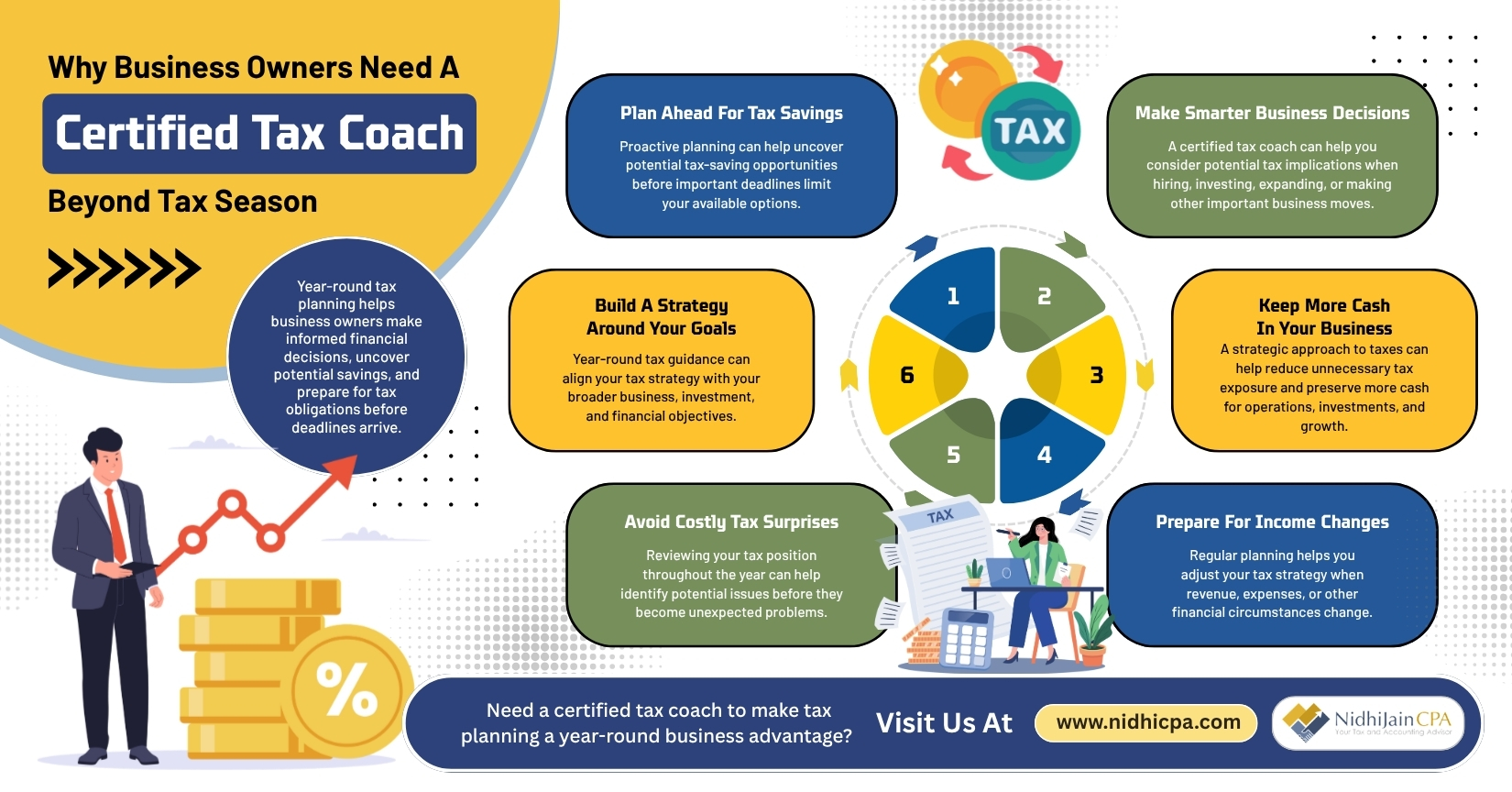
Year-end is an important time for business owners to review their financial position and prepare for upcoming tax obligations. Waiting until tax filing season to examine income, expenses, and business decisions can leave limited time to make changes that may affect the next tax return. Proactive planning can give business owners a clearer understanding of their financial position and help them prepare for the year ahead.

This blog covers several year-end considerations, including reviewing expenses, organizing financial records, evaluating business structure, and preparing for future tax obligations.

Reviewing Business Income and Expenses

One of the first steps in tax planning in the Bay Area is reviewing the business’s income and expenses before the year closes. Comparing current financial results with previous periods can help identify significant changes in revenue, operating costs, and profitability.

Business owners can review whether financial records accurately reflect transactions completed during the year. Missing receipts, incorrectly categorized expenses, or unreconciled accounts can make tax preparation more difficult.

Working with professional bookkeeping and accounting support can help businesses maintain organized records throughout the year and make year-end reviews more efficient.

Evaluating the Business Structure

A business structure can influence how income is reported and how taxes are handled. Business owners who have experienced substantial growth, changes in ownership, or changes in their operations may want to review whether their current structure continues to suit their circumstances.

tax strategy

Factors to Review

Before making structural changes, business owners can consider:

Business Growth

Changes in revenue, profitability, or the number of owners may affect whether the current structure remains appropriate.

Tax Considerations

Different structures can have different tax treatment and reporting requirements. Reviewing these considerations before year-end can support more informed planning.

Future Business Goals

Expansion, investment, hiring, or changes in ownership may influence future tax and accounting needs.

Prepare for Future Tax Obligations

Year-end planning should not focus solely on the immediate tax return. Business owners can also consider expected income, upcoming expenses, expansion plans, and other financial changes that could affect future obligations.

A proactive approach to tax planning services may help identify potential issues earlier and create a clearer financial strategy for the coming year. It can also provide an opportunity to discuss longer-term goals rather than making decisions only around filing deadlines.

Get Professional Guidance Before the Year Ends

Nidhi Jain CPA provides business tax services for businesses seeking organized financial and tax support.

Business owners who want to review their year-end position can contact us to discuss their tax planning needs and prepare for the year ahead.

This photo shows some tax documents on a table.

Many small businesses begin by managing their finances with spreadsheets, accounting software, or informal recordkeeping. This approach may work when transactions are limited, but as businesses grow, bookkeeping often becomes too time-consuming and complicated to manage alone. Accurate financial records are important not only for tax filing but also for understanding cash flow, expenses, profitability, and future business decisions.

This blog covers key signs that a business may need professional bookkeeping, including reconciliation challenges, financial reporting demands, accounts payable, and maintaining organized records.

When DIY Bookkeeping Starts Taking Too Much Time

Bookkeeping can become difficult to manage as a business adds customers, vendors, bank accounts, expenses, and financial transactions. Business owners who spend hours every week entering transactions or correcting records may be taking valuable time away from operations and growth.

A growing company may benefit from professional bookkeeping and accounting when financial tasks begin interfering with core responsibilities. Professional support can help keep records organized while giving business owners more time to focus on clients and strategic priorities.

Signs Your Business Has Outgrown DIY Bookkeeping

Several warning signs can indicate that a business has reached the point where additional bookkeeping support would be beneficial.

Bank Reconciliations Are Falling Behind

Bank and credit card accounts should be reconciled regularly so that financial records accurately reflect actual transactions. When reconciliations are delayed, or unexplained differences continue appearing, it may be time to consider professional bookkeeping in the Bay Area.


Financial Reports Are Difficult to Understand

Financial statements can provide valuable insight into revenue, expenses, profitability, and cash flow. If reports are incomplete, outdated, or difficult to interpret, professional bookkeeping support can help create more reliable information for decision-making.

Accounts Payable Is Becoming Disorganized

As a company grows, the number of vendors and bills may increase. Missing invoices, late payments, and unclear payment records can create unnecessary financial stress. Organized bookkeeping can help businesses maintain better visibility into outstanding obligations.

Records Are Not Ready for Tax Filing

Business owners should maintain accurate records throughout the year rather than trying to reconstruct transactions when tax deadlines approach. Professional bookkeeping can help keep financial information organized for business tax filing needs and make tax preparation more efficient.

When Professional Support Makes Sense

Nidhi Jain CPA provides professional bookkeeping and accounting support designed to help businesses maintain accurate records while staying focused on their operations and long-term growth.

Businesses that are spending too much time managing spreadsheets, falling behind on reconciliations, or struggling to understand their financial records can contact us to discuss bookkeeping and accounting needs and determine what level of professional support may be appropriate.